Health and Safety Policy for Flat Clearance Blackwall Operations
 Introduction: This health and safety policy outlines the responsibilities, standards and practical measures adopted by our flat clearance and rubbish removal operation. It applies to all staff, sub-contractors and visitors working in the service area during clearances, waste collection, loading and transfer activities. The aim is to prevent injury, protect health and ensure the safe handling and removal of household and commercial waste while providing efficient clearance services.
Scope and application: The policy covers routine and non-routine tasks associated with flat clearance, including rubbish collection, bulky item removal, site clearance, segregation of recyclable materials and transportation of waste. All personnel involved in flat removals and waste clearance must adhere to the standards set out below. This policy is intended to be proportionate to the operational risks present across our service zone and is not a substitute for task-specific risk assessments.
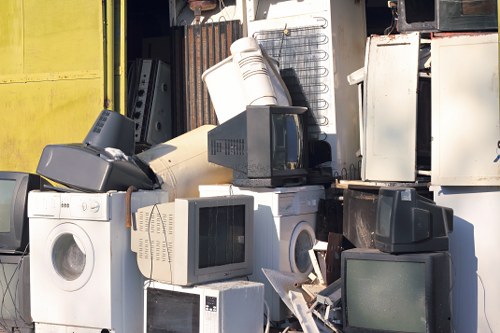 Responsibilities: Management is responsible for providing resources, ensuring competent supervision and maintaining safe systems of work. Employees and contractors must follow safe working practices, use personal protective equipment (PPE) correctly and report hazards or incidents promptly. Supervisors must ensure that every job has an appropriate risk assessment and that controls are implemented before work begins.
Risk Assessments and Safe Systems of Work
All flat clearance operations require a written or recorded risk assessment prior to commencement. Risk assessment must identify manual handling hazards, hazardous materials, fire risks, environmental risks and potential traffic/interface hazards during loading and waste disposal. Controls should be proportionate and practical: remove trip hazards, cordon unsafe areas, and ensure clear access for personnel and vehicles.
 Manual handling and lifting: Manual handling procedures must be followed at all times. Use mechanical aids where possible and ensure lifting techniques are taught and supervised. Team lifts should be used for heavy or awkward items, and tasks rotated to reduce fatigue. Employees must not attempt to move items beyond their capability without assistance or equipment.
PPE and equipment: Appropriate PPE is mandatory on site and must be maintained in good condition. Typical PPE includes high-visibility clothing, gloves, safety boots, eye protection and dust masks where applicable. All tools and mechanical aids must be inspected regularly. Faulty equipment must be removed from service until repaired or replaced.
Hazardous Materials, Waste Segregation and Environmental Controls
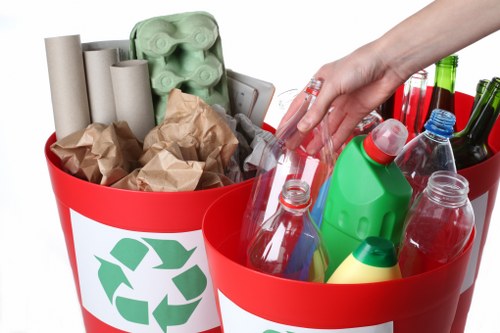
Some clearances may uncover hazardous items such as asbestos-containing materials, sharps, chemicals or electronic waste. Employees must not handle identified hazardous waste unless trained and authorised. Such materials must be isolated and reported for specialist removal. Our waste clearance procedures emphasise segregation of recyclables, safe containment of hazardous items and minimising contamination of the wider environment.
 Traffic Management and Vehicle Safety: Vehicle movements are a significant risk during rubbish collection and flat removals. Clear signage, nominated loading zones and spotters should be used when operating in constrained areas. Drivers must complete pre-use vehicle checks and secure loads to prevent spillage during transit. Reversing should be minimised and assisted by a competent banksman where necessary.
Fire safety and emergency procedures: Work sites must have clear escape routes and fire precautions suitable to the tasks. Smoking is prohibited in operational areas. Emergency arrangements include first aid provision, accessible fire-fighting equipment and a clear procedure for evacuation and emergency services liaison. All incidents must be reported and recorded.
 Training, Competence and Communication: Effective training underpins safe flat clearance operations. Staff must receive induction training, task-specific instruction and refresher training as required. Communication channels should allow rapid reporting of hazards and dissemination of updates to procedures. Toolbox talks and briefings should be conducted before higher-risk jobs.
Monitoring, inspection and continuous improvement: Regular site inspections and audits will ensure compliance with this policy and identify opportunities for improvement. Incident and near-miss investigations will determine root causes and corrective actions. Performance in health and safety will be reviewed periodically, and changes to procedures will be communicated to all personnel.
Key controls summary:
- Completed risk assessment for every clearance task
- Mandatory PPE and equipment checks
- Safe manual handling procedures and use of mechanical aids
- Segregation and specialist handling of hazardous waste
- Traffic management and secure vehicle operations
- Training, incident reporting and regular inspections
Roles and accountability: Everyone on site has a role in health and safety: managers provide leadership and resources, supervisors translate policy into practice, and staff apply safe methods and report concerns. This shared responsibility is essential to maintain safe and effective rubbish removal, waste clearance and flat clearance services across our operational area.
Implementation and review: This policy will be maintained under management oversight and reviewed annually or after any significant incident, change in operations or new legislation. Changes will be implemented promptly and communicated to all relevant parties. A commitment to safe, legal and environmentally responsible clearance operations remains central to our work.
Conclusion: By following the controls described, using the appropriate protective equipment and maintaining clear communication, our flat clearance teams and rubbish collection staff can reduce risks and protect people and property. Safety is an integral part of every job; adherence to this policy ensures professional, responsible and safe clearance services.